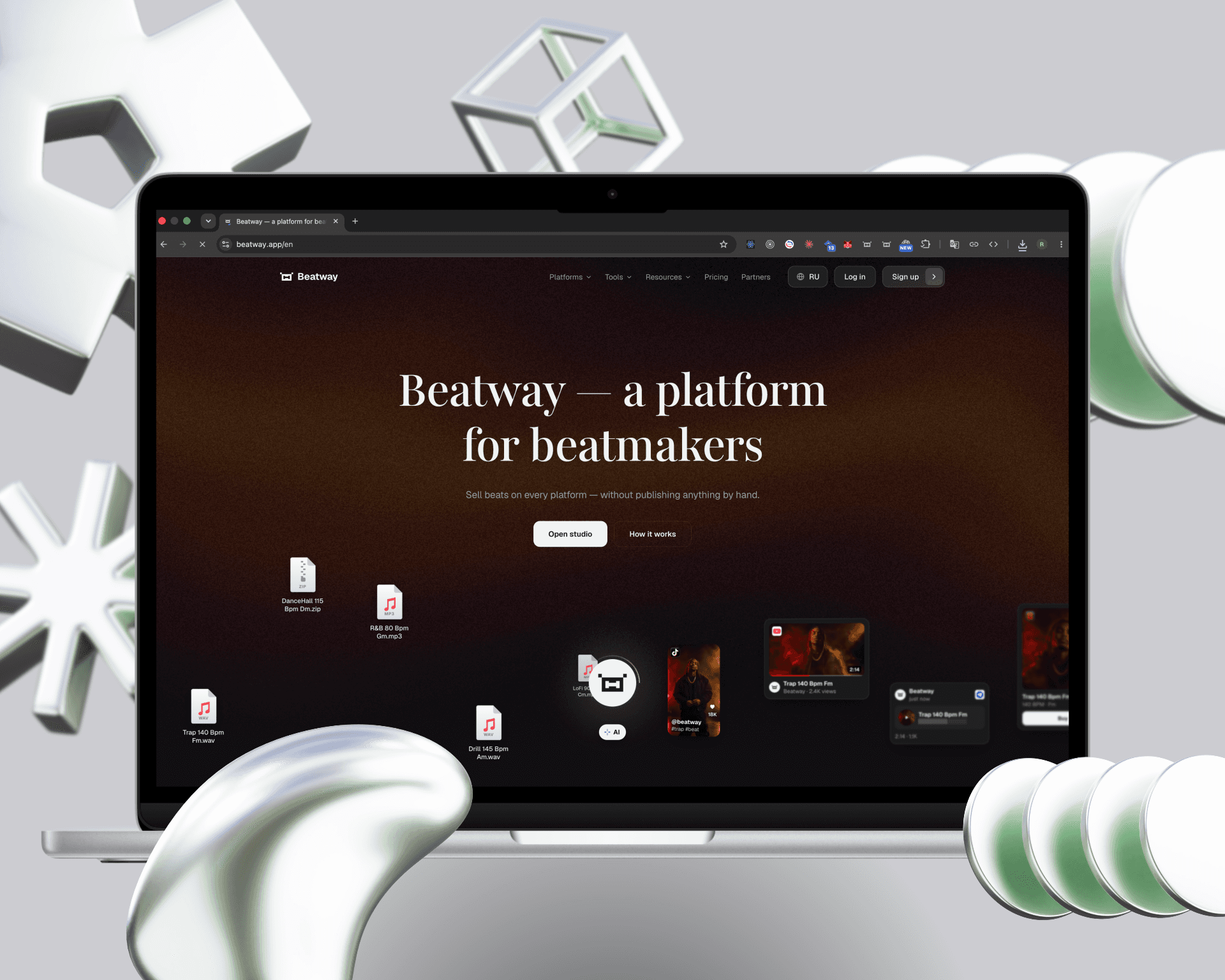
Beatway is an AI-powered platform that auto-publishes music across every major platform — from a single beat upload to a finished release, with no manual work in between.
Beatmakers and producers finishing a track had to manually prepare covers, tags and descriptions, cut vertical clips for TikTok and Reels, and publish everything across a dozen platforms one by one. Beatway needed a service that automates the entire cycle.
We built the full pipeline — from a single file upload to publishing on YouTube, SoundCloud, TikTok, Instagram, Telegram, VK and BeatStars. AI generates covers, tags, descriptions and platform-specific SEO packaging. Automatic editing cuts short-form video for social and reels, with AI detecting the track's "hook". The platform includes a built-in, commission-free storefront with a personal SmartLink, flexible licensing (MP3 Lease, WAV, Stems, Exclusive), payment processing via both card rails (Visa/Mastercard/Apple Pay) and crypto (USDT/USDC) with instant file delivery, revenue splits between co-authors, automated mailing to the client base, watermarked demos, and an analytics dashboard.
The hard part is other people's platforms.
Uploading a beat is the easy half. The rest is other people's platforms — each with its own API, its own review process and its own rules about what an app may post on a creator's behalf.
Interface
The upload wizard, platform fields and post previews — one Next.js app serving both the public tool pages and the logged-in studio.
- Next.js 16
- React 19
- TypeScript
- React Hook Form
- Zod
Design system
A workspace package of accessible primitives, shared by the studio, the admin panel and the marketing site rather than rebuilt in each.
- @beatway/ui
- Radix UI
- TanStack Table
- Phosphor Icons
Backend and data
A NestJS API holding releases, platform connections and OAuth tokens, with cron jobs that render video, sync post metrics back and publish the blog.
- NestJS 11
- PostgreSQL
- Prisma 7
- JWT
- @nestjs/schedule
Media and AI
FFmpeg probes the audio and renders vertical cuts and video; DeepSeek fills tags, descriptions and per-platform copy from the track.
- FFmpeg
- DeepSeek
- Cloudflare R2 (S3 API)
Integrations and delivery
Each destination is its own contract: official OAuth where an API exists, a browser extension where it doesn't, plus payments and messaging.
- OAuth 2.0 + PKCE
- Chrome Extension MV3
- Polar
- Telegram
- Nodemailer
Architecture
One pnpm workspace holds the API, the studio, the admin panel, the landing pages and the extension, each deployed independently.
- pnpm monorepo
- Vercel
Published through the front door.
Every destination is reached through its official API, with the creator's own OAuth grant — no stored passwords, no headless browsers posting as the user. That choice sets the pace of the project: each platform has to approve the app before real creators can use it, and each one approves a different thing.
- Google OAuth verification
YouTube
YouTube Data API v3- Scope: youtube.force-ssl
- Resumable upload → videos.update → thumbnails/set
- Quota: 10,000 units/day per project
The scope is deliberately youtube.force-ssl rather than the narrower youtube.upload: the latter can publish a video but cannot edit a live one's title, description or tags afterwards. Sensitive scopes have to clear Google's OAuth verification review before anyone outside the test-user list can connect. Lead scanning runs on a key in a separate Cloud project, because quota is shared per project and one aggressive scan would otherwise take producers' publishing down with it.
- Content Posting API audit
TikTok
Content Posting API — Direct Post- Scopes: user.info.basic, user.info.profile, video.publish
- creator_info → video/init → status poll
- Single-chunk upload cap: 64 MB
Direct Post puts the clip straight on the creator's profile instead of handing them a draft to finish by hand, which is what makes the pipeline automatic — and it is also the part TikTok audits. Before the audit passes, an app may only post with SELF_ONLY visibility, so the studio detects that state and says so in plain language rather than failing with a raw API error. Every publish first queries creator_info and honours what it returns: the account's available privacy levels, any duet, stitch or comment toggles the creator has disabled, and the daily post caps.
- Meta App Review
Instagram
Instagram API with Instagram Login- Scopes: instagram_business_basic, instagram_business_content_publish
- REELS container → status poll → media_publish
- Professional account required
Built on Instagram Login rather than Facebook Login, so a producer connects an Instagram Business or Creator account directly without a linked Facebook Page. Reels publish in two steps — create the media container, wait for Instagram to finish processing, then publish — and the container reports FINISHED slightly before it is genuinely ready, so publishing is retried rather than failed. Meta's review also requires a deauthorization callback: when someone removes the app from inside Instagram, Meta signs a request to Beatway, the signature is verified against the app secret, and the connection is deleted.
And one platform with no front door at all.
BeatStars publishes no public API. Rather than drop it from the pipeline, we shipped a Manifest V3 Chrome extension that publishes a Beatway release to BeatStars using the creator's own logged-in session. It is a pure API client against BeatStars' own private endpoints, reverse-engineered from live network traces — not a script clicking through their interface, so it does not break every time they move a button. The studio talks to it directly over the extension messaging bridge; no content script runs on the Beatway side.
- 01Studio sends the release over the extension bridge
- 02Audio pre-checked for stereo / 44.1 kHz / 16-bit
- 03Genres and moods resolved against BeatStars' taxonomy
- 04Track, artwork and tagged preview uploaded, then published
A platform where a beat becomes a release
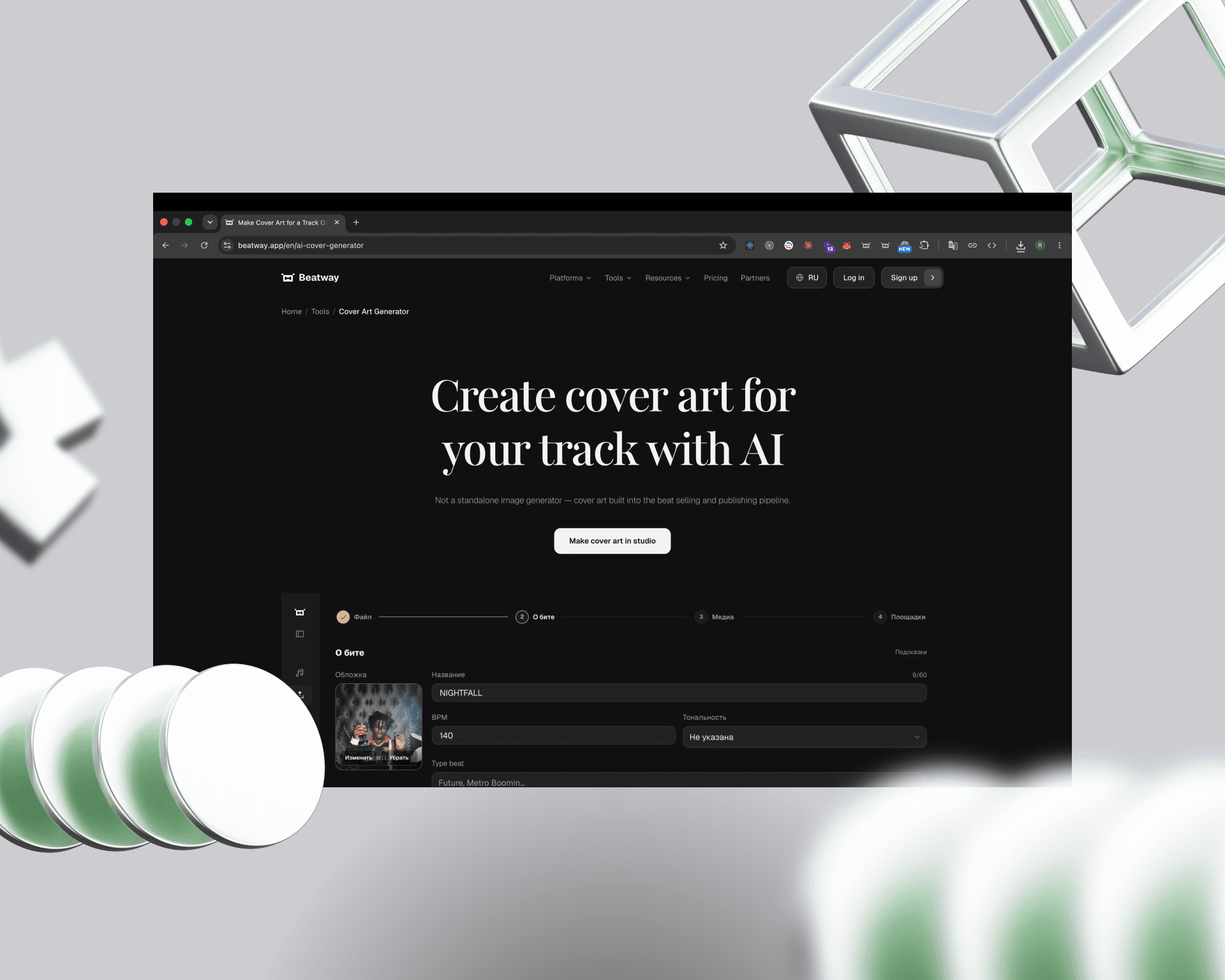
Beatway brings uploading, packaging, publishing and selling into one product. We designed the journey from the first upload to a finished release across every platform. A display serif sets the tone, a compact grotesque carries the interface, and dark surfaces keep attention on the artwork and the waveform.

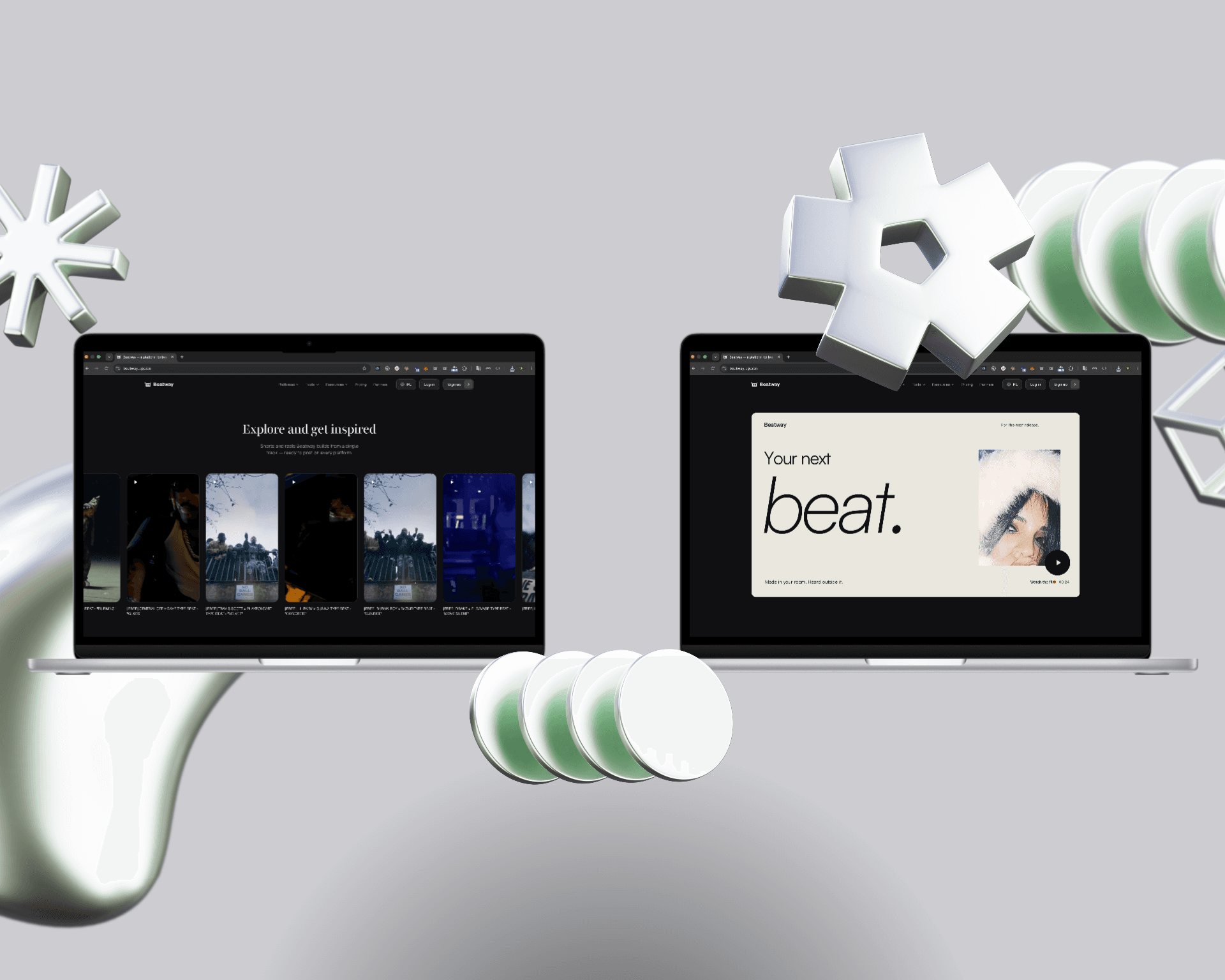
A commission-free shop with its own SmartLink
Every producer gets a personal storefront: beat cards, waveform previews, licence tiers from MP3 Lease to Exclusive, and card or crypto checkout with instant file delivery. The light storefront theme deliberately contrasts with the dark studio — the shop is the part buyers see.
A tape inside a deck.
The mark is built on a pixel grid from two ideas: the body of a tape deck and the reels of a cassette running inside it. One shape carries both the studio and the music it releases.
The deck
A solid rectangle with two stubs on top — the body of a tape deck, drawn on the same pixel grid as the interface.
The tape
Two reels joined by a strip of tape. The beat moves from one side to the other: upload on the left, release on the right.
One symbol
The tape is cut out of the deck rather than placed on it. Negative space does the work, so the mark stays legible at 16 pixels.
Two typefaces. One voice.
Playfair Display speaks for the brand: a high-contrast serif, narrowed to 88% width and set at a 144pt optical size, so headlines keep the cut of a record sleeve. Geist does the work of the interface, and Geist Mono holds the numbers a producer actually reads — tempo, key, duration, price.
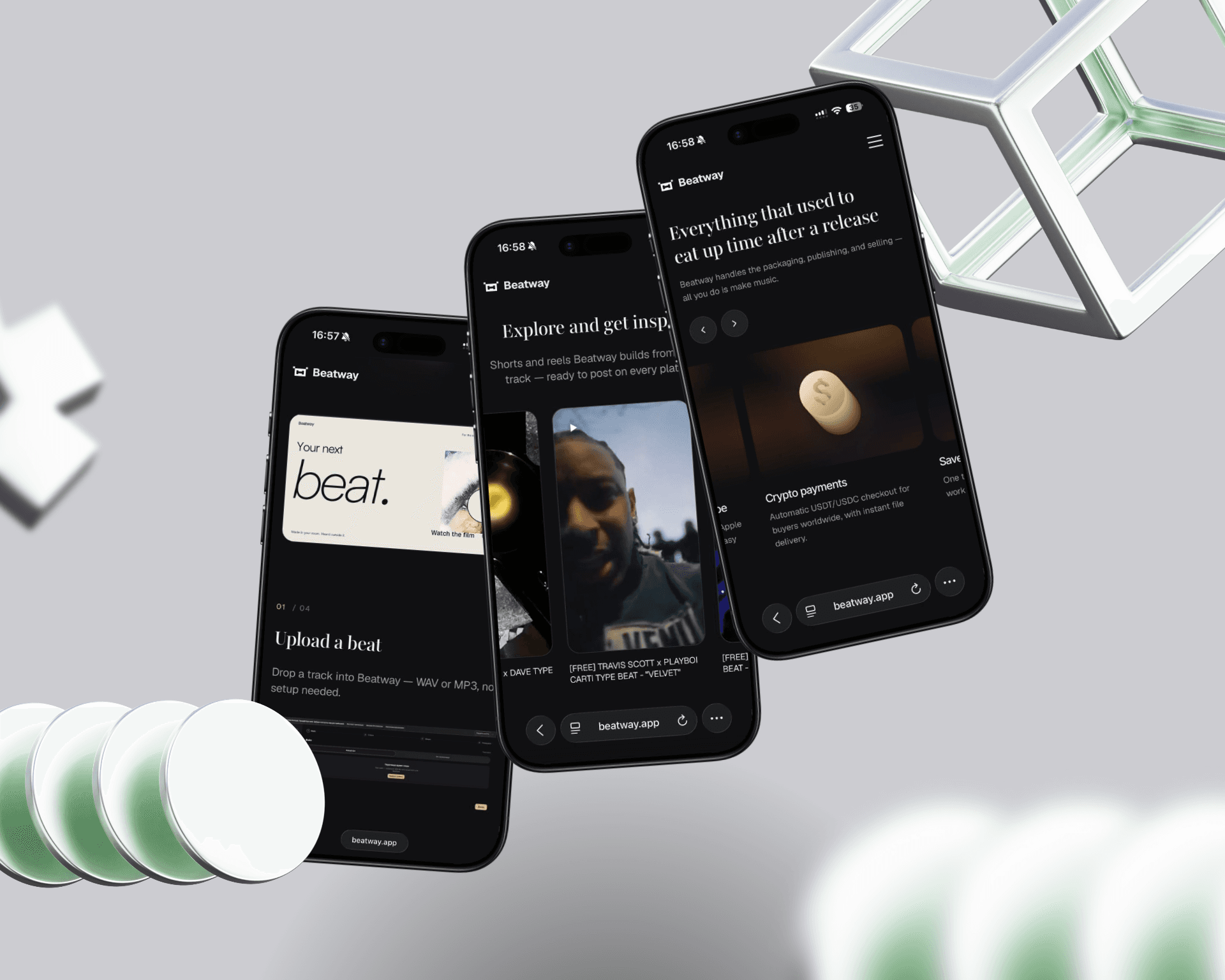
Cover art, video and visuals from one upload
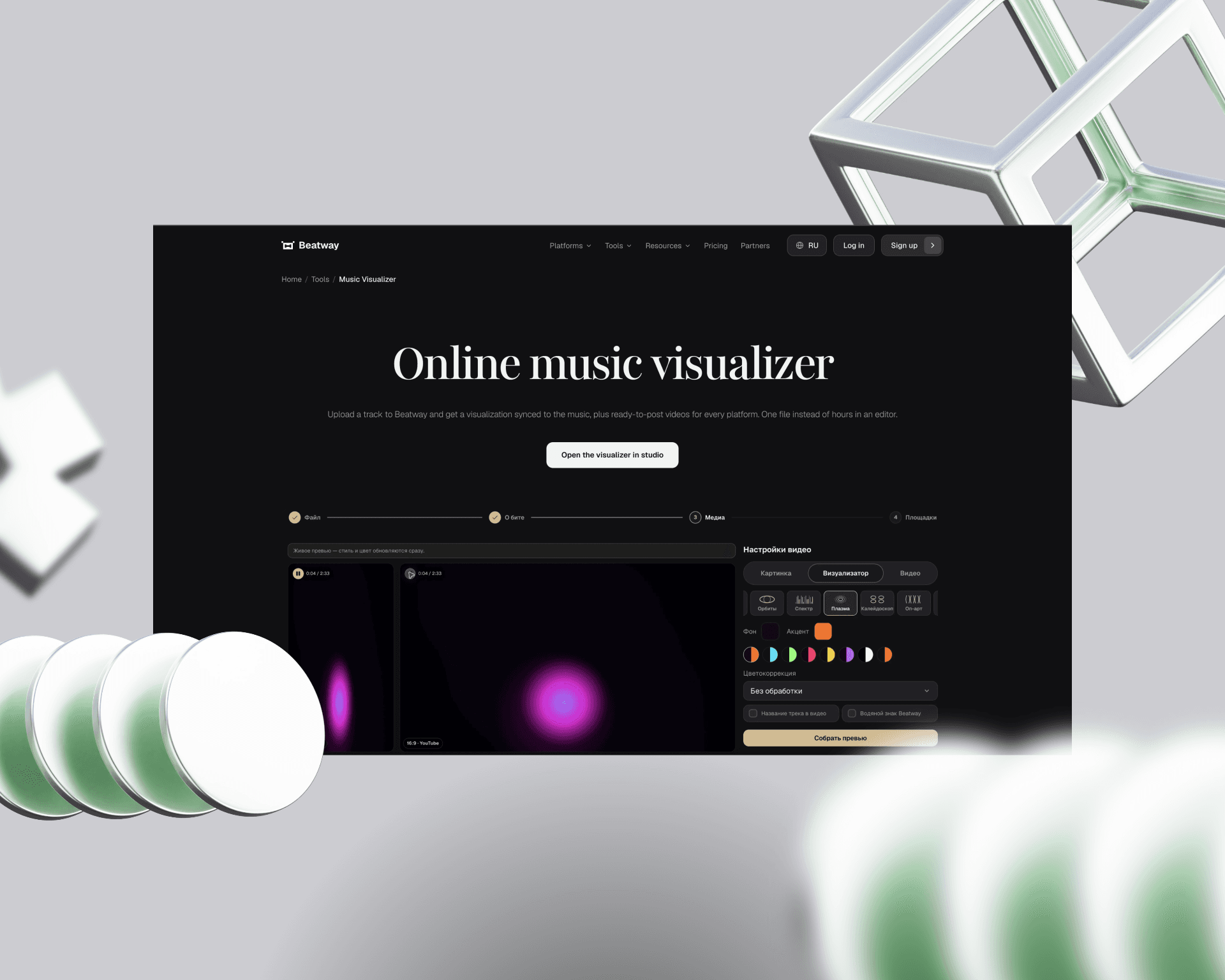
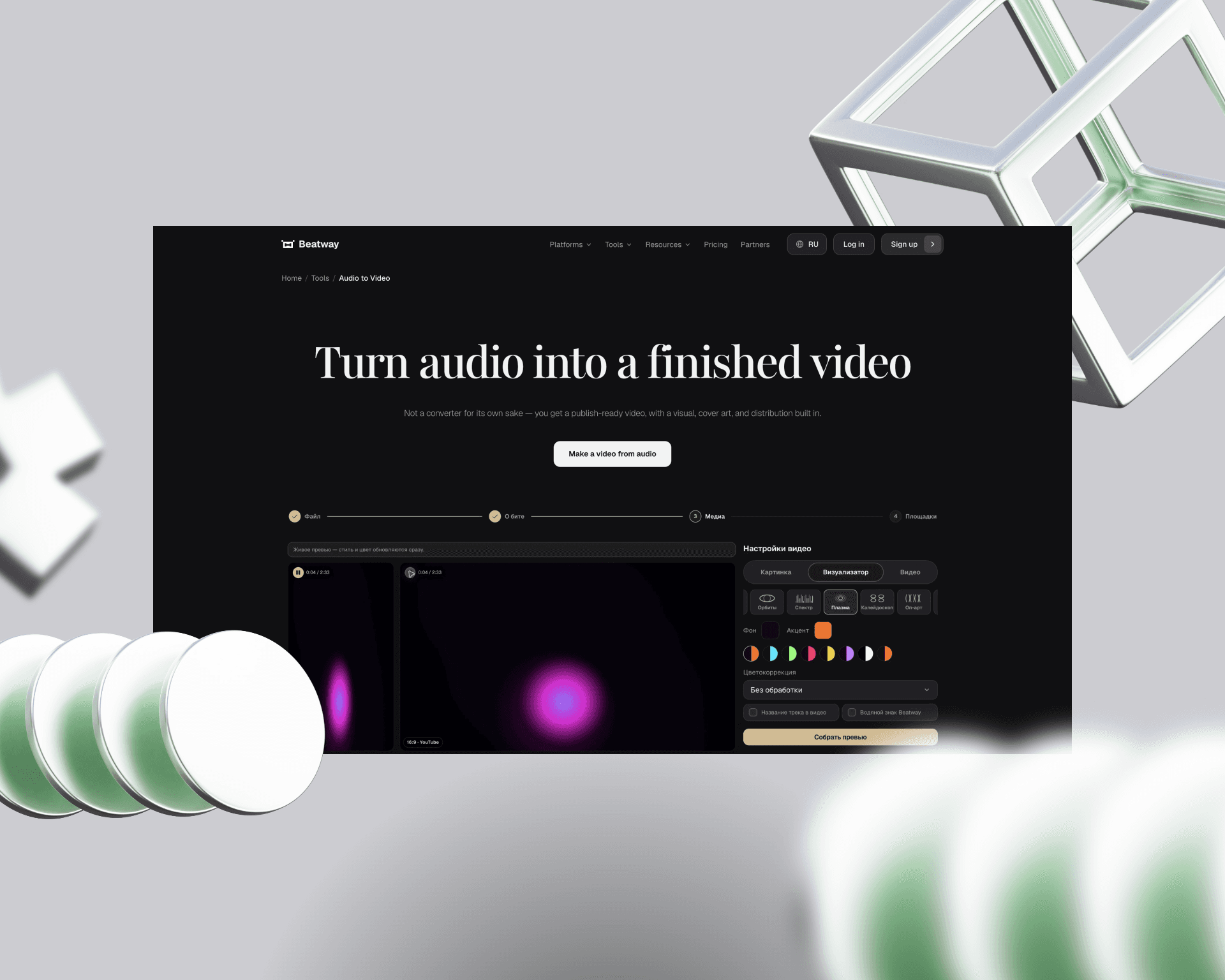
Separate tool pages open the pipeline step by step: an AI cover art generator, an audio-to-video converter and an online music visualiser. Each one is a public entry point from search as well as a step inside the studio, so the same wizard serves both the landing page and the logged-in flow.
Readable down to the favicon.
At a large scale the reels and the tape between them read clearly. At interface sizes the silhouette holds — which is exactly what the studio header and the mobile app need.
A studio at night, lit by one warm light.
Sand
A warm, muted gold is the only accent in the product. It marks prices, active steps and primary actions — the places where a producer decides something.
Studio black
An almost-black base lets cover art, waveforms and video previews carry the colour. Surfaces step up from the page in small increments rather than borders.
Bone
An off-white holds the display headlines and the storefront theme. Slightly warm, so it sits beside the sand accent without turning blue.
Beatway — a platform for beatmakers
Upload a beat once. Beatway builds the cover, the tags, the description and the video, then publishes everything across every platform.
Tempo, key and licence price are the first things a buyer compares. Tabular figures keep them aligned down a column of beat cards.
One upload, every platform
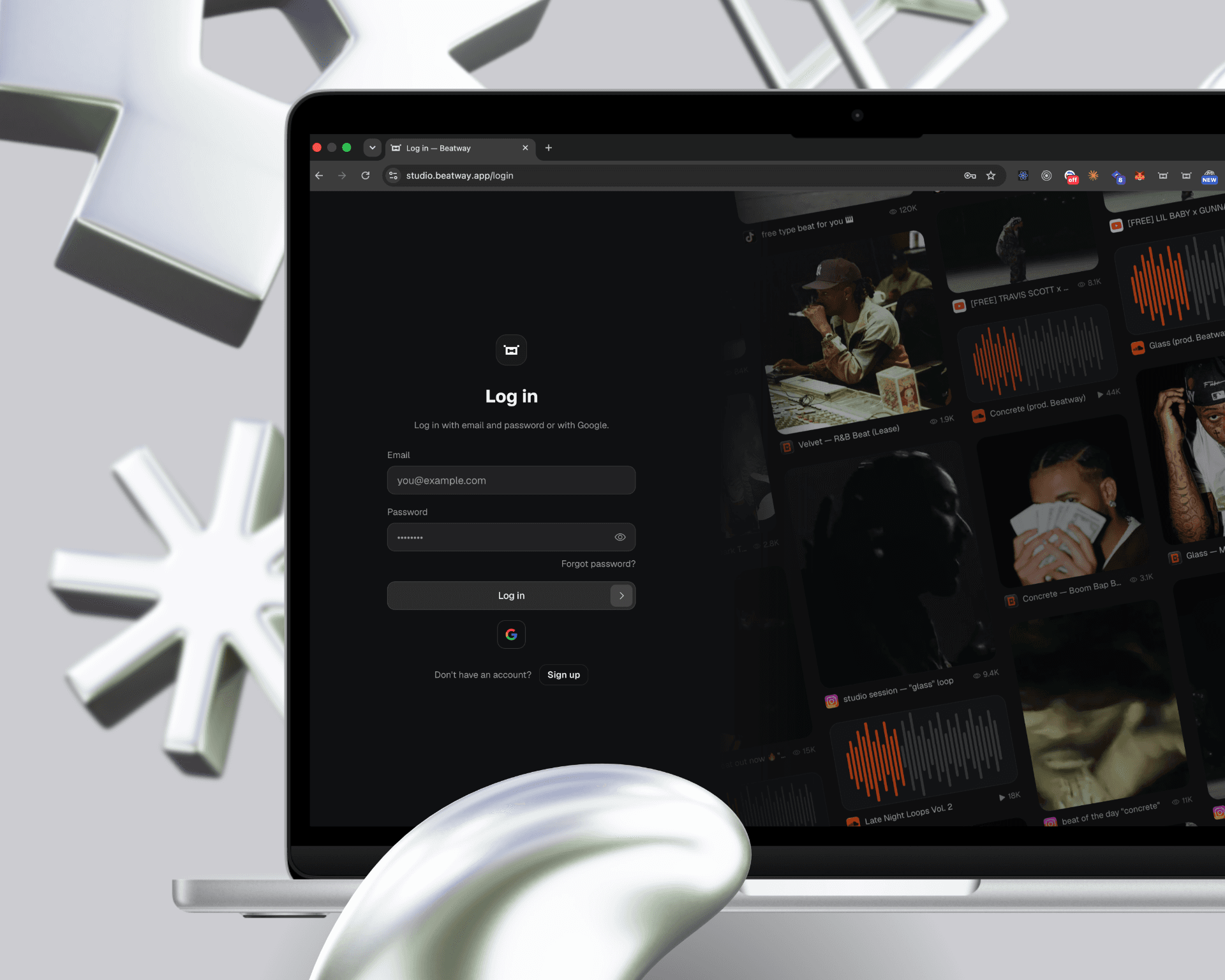
Inside the studio a single file turns into covers, tags, descriptions, vertical cuts and posts on YouTube, TikTok, Instagram, Telegram and BeatStars. The feed of published releases sits next to the login screen, so the result of the pipeline is the first thing a new producer sees.
Have something similar in mind?
Tell us about the project — we will come back with an estimate and a launch plan within a business day.

